Genuine vs Fake Spring Washers: Spot the Difference
Last updated: 24 Oct 2026
7 Views
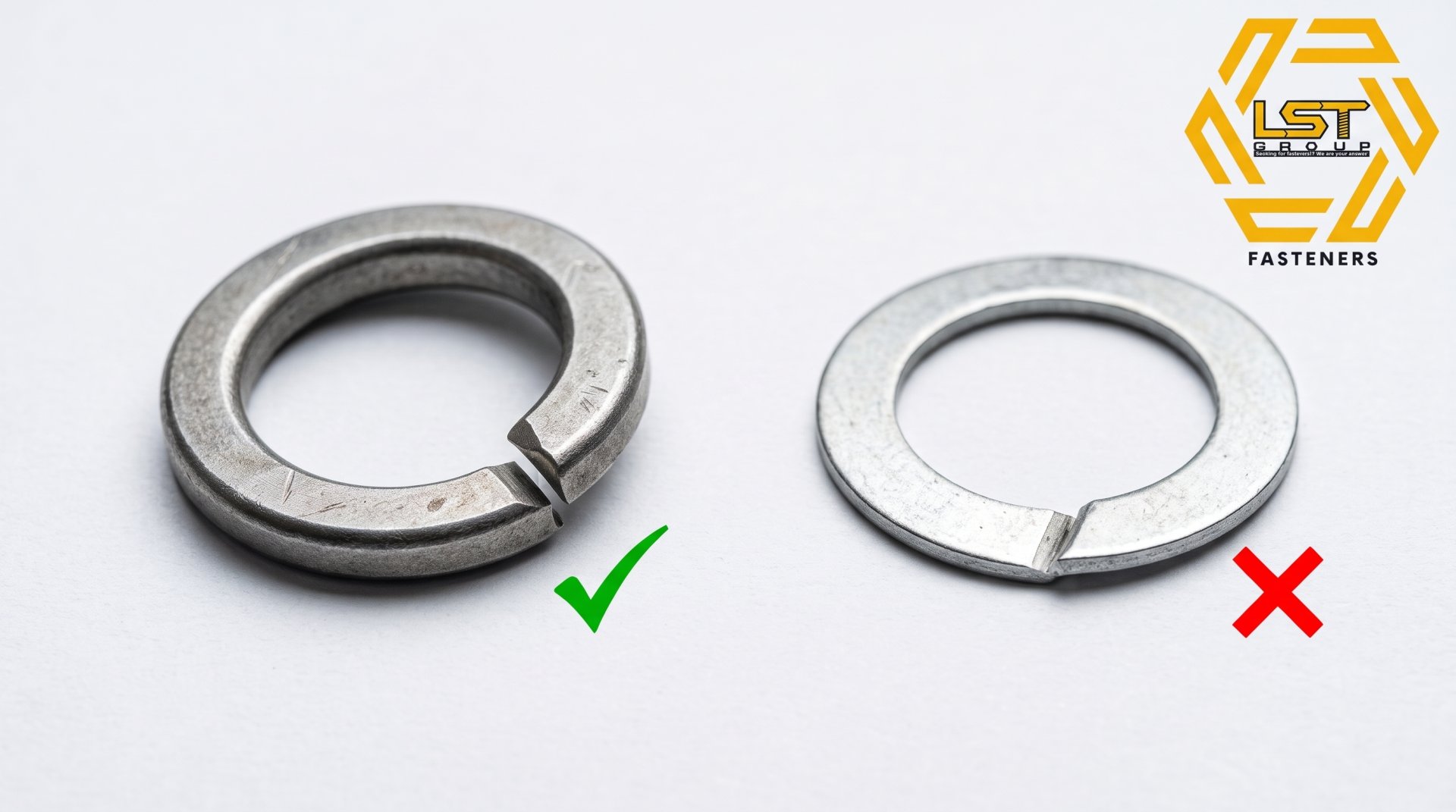
Genuine vs. Fake Spring Washers: How to Tell the Difference? Know This Before Your Bolts Come Loose!
Hello everyone! Today, we are going to talk about something close to home that all mechanics, engineers, and DIY lovers need to watch out for. We are talking about the epidemic of "Fake Spring Washers" flooding the market! Many of you might just grab any random washer when buying bolts and nuts at a hardware store, right? You might think it's just a piece of metal to put under a nut and call it a day. But hold on! In the world of engineering and construction, this tiny metal ring can be a matter of life and death for your structures or machinery.
Why are "Spring Washers" a Matter of Life and Death?
First, let's understand the basics. The main physical function of a Spring Washer (or lock washer) is to solve the problem of nuts loosening due to vibration. Suppose you are assembling an engine, a motor, or a large steel structure. When the machine is running, it constantly generates vibration. This vibration is the ultimate enemy of threaded joints because it causes the threads of the bolt and nut to slowly shift and loosen until they eventually fall apart.
To solve this, spring washers must possess Spring Tension! They are not flat like regular plain washers (flat washers); they are split and twisted. When you tighten a bolt and compress the washer flat, a high-quality spring washer constantly tries to "spring back" to its original shape. This built-in tension constantly pushes against the bolt and nut threads, locking them tightly together. No matter how much it vibrates, it won't come loose. Makes sense, right?
The "Fake Spring Washer" Epidemic: A Silent Threat
However, the major problem in our market right now is the rampant spread of fake spring washers (sometimes called internal spring washers, or just regular washers stamped to look like springs). The main reason behind this is manufacturers trying to cut costs. The material used is not high-carbon spring steel treated with heat (Heat Treatment) according to industrial standards. Instead, they use low-grade mild steel and simply stamp it into a bent, spring-like shape.
The real disaster happens when you actually use them. Once you place a fake spring washer under a nut and tighten it... it goes completely flat! What happens is that the material undergoes permanent "Plastic Deformation." The tension it's supposed to have vanishes entirely, turning it into nothing more than a crappy, flat plain washer. There is no stored energy and no pushing force against the threads. With just a little machine vibration, the nut will easily rattle loose and fall off. Imagine how dangerous it would be if these were used in car suspensions, scaffolding, or roof structures!
Deep Dive: Why are Genuine Spring Washers (Grade 8.8) Better?
A genuine spring washer (also known in the industry as imported spring washers, hardened steel spring washers, or 8.8 spring washers) is manufactured under strict industrial standards, such as JIS B 1251 No. 2 from Japan or DIN 127 from Germany. They are made from high-carbon steel that has undergone precise heat treatment, giving the metal high elasticity.
When you use a genuine Grade 8.8 spring washer, even if it is compressed flat against a workpiece for decades, the molecular structure of the steel continuously maintains its resistance (tension). It compensates for any micro-gaps caused by bolt elongation from temperature changes or the settling of materials, ensuring that the connection point remains highly stable and exceptionally safe.
How to Test: Spotting the Real vs. the Fake
To save everyone from the clutches of fake spring washers, I have simple observation and testing methods for you, categorized into two levels:
Visual Inspection: This is the most basic method. Place them side-by-side. The genuine one will have visibly thicker wire and look much more robust. Additionally, the cut ends of a genuine washer are usually sharp and perfectly angled because high-quality machinery is required to cut hardened steel. Fakes, on the other hand, look thinner, flimsy, and the cut edges might look squashed or uneven.
The Hardcore Test (The Vise Test): If you are willing to sacrifice a washer to be absolutely sure, grab a bench vise. Clamp the spring washer in the vise and crush it completely flat. Tighten it as much as you can and leave it like that for a full 24 hours to simulate real, heavy-load conditions. Then, release the vise.
If it "springs back" and twists to its original overlapping shape (it might flatten slightly but clearly retains its spring nature), it means it's GENUINE! The steel has true elasticity.
But if you release the vise and it stays "completely flat"... congratulations, you got a FAKE. Throw it straight into the trash. Never use it for important or load-bearing jobs.
Conclusion: Safety Must Always Come First
In my opinion, whether it's mechanical work, structural engineering, or any DIY project that deals with weight or vibration, "Safety must always come first." The catastrophic damage from a broken machine or a collapsed structure caused by a single loose nut is absolutely not worth the few cents you saved.
Don't be stingy over a cheap spring washer. When buying parts or fasteners, clearly specify to the shop that you want "Genuine Spring Washers" or "Hardened Spring Washers Grade 8.8". Go to a reliable hardware store or an authorized distributor. Buy high-quality, standardized products to support your hard work. Paying a little extra guarantees a perfect, safe finish, saving you from future headaches and unforeseen, dangerous accidents!
Click here to shop for genuine, industry-standard spring washers in various sizes. Be confident in every joint!
Related Content
If you're new to mechanics or DIY projects, you've probably noticed that bolts come with different thread patterns.
15 Feb 2025

อย่างที่ว่าไว้ในบทที่ 2 คือการเรียกขนาดของสกรูนั้นมี 2 ประเภทใหญ่ๆ คือ ระบบมิล (Metrics) และ ระบบหุน (Unified) ซึ่งก็จะสอดคล้องกับเกลียวของสกรู เนื่องจากเกลียวของทั้ง 2 ระบบนั้น ไม่สามารถนำมาใช้ร่วมกันได้
18 Mar 2024

สกรูเกลียวปล่อยเรียกเป็นเบอร์ เพราะว่าในอดีต สมัยก่อน ยังไม่มีระบบมาตรฐานการวัดขนาดสกรูที่ชัดเจน ผู้ผลิตสกรูแต่ละเจ้า จึงใช้วิธีวัดขนาดสกรูด้วยวิธีของตัวเอง
26 Mar 2024
