Fine Thread vs Coarse Thread Bolts: Which One Should You Choose?
Last updated: 15 Feb 2025
29069 Views
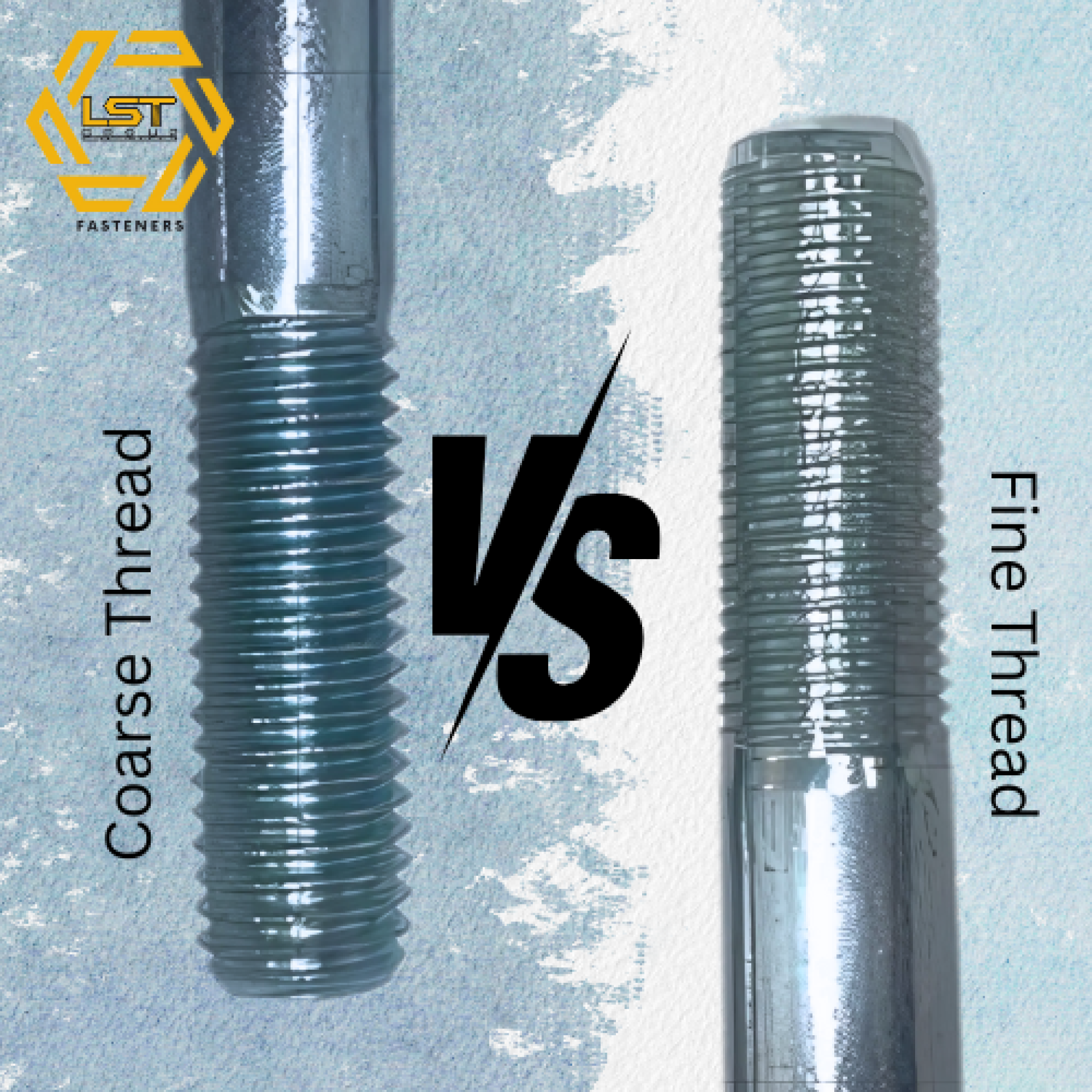
If you're new to mechanics or DIY projects, you've probably noticed that bolts come with different thread patterns. Today, we'll break down the difference between fine thread and coarse thread bolts to help you make the right choice for your project.
What's the Difference?
Think of thread pattern like the spiral on a bolt. Coarse threads are spaced further apart, while fine threads are closer together. For example, a 1/2-inch coarse thread bolt has 13 threads per inch, while its fine thread counterpart has 20 threads per inch.
Coarse Thread Bolts: The Everyday Champion
Advantages:
- Faster to install and remove
- Less likely to cross-thread
- Better in soft materials like aluminum or plastic
- More resistant to rust and corrosion
- Easier to find in hardware stores
- More forgiving if slightly damaged
Best Uses:
- General construction
- Wood projects
- Automotive body parts
- Quick assembly tasks
- Areas exposed to weather
- When frequent maintenance is needed
Fine Thread Bolts: The Precision Player
Advantages:
- Stronger clamping force
- Better vibration resistance
- More precise adjustments
- Higher tensile strength
- Better for hard materials like steel
- Greater thread engagement
Best Uses:
- Engine components
- Suspension parts
- High-stress applications
- Precision machinery
- Aircraft components
- When vibration resistance is crucial
Making Your Choice: A Simple Guide
Ask yourself these questions:
1. What material are you working with?
- Soft materials Choose coarse threads
- Hard materials Choose fine threads
2. Is vibration a concern?
- High vibration environment Choose fine threads
- Low vibration environment Either will work
3. How often will you need to remove the bolt?
- Frequent maintenance Choose coarse threads
- Permanent installation Fine threads might be better
4. What's the stress level on the bolt?
- High stress Consider fine threads
- Normal stress Coarse threads will do
## Pro Tips for Beginners
1. When in doubt, go coarse. They're more common and more forgiving for beginners.
2. Always match the original thread type when replacing bolts, especially in vehicles.
3. Remember that fine threads need more care during installation to avoid cross-threading.
4. Keep some of both types in your toolbox you'll eventually need both.
## A Word of Caution
Remember that choosing the wrong thread type isn't just about convenience it can affect safety, especially in critical applications like brakes or engine parts. When working on vehicles or machinery, always consult the manual or a professional if you're unsure.
## Conclusion
For most DIY projects and general repairs, coarse thread bolts will serve you well. They're easier to use, more widely available, and more forgiving. Save the fine thread bolts for specific applications where precision and maximum holding power are essential.
What's the Difference?
Think of thread pattern like the spiral on a bolt. Coarse threads are spaced further apart, while fine threads are closer together. For example, a 1/2-inch coarse thread bolt has 13 threads per inch, while its fine thread counterpart has 20 threads per inch.
Coarse Thread Bolts: The Everyday Champion
Advantages:
- Faster to install and remove
- Less likely to cross-thread
- Better in soft materials like aluminum or plastic
- More resistant to rust and corrosion
- Easier to find in hardware stores
- More forgiving if slightly damaged
Best Uses:
- General construction
- Wood projects
- Automotive body parts
- Quick assembly tasks
- Areas exposed to weather
- When frequent maintenance is needed
Fine Thread Bolts: The Precision Player
Advantages:
- Stronger clamping force
- Better vibration resistance
- More precise adjustments
- Higher tensile strength
- Better for hard materials like steel
- Greater thread engagement
Best Uses:
- Engine components
- Suspension parts
- High-stress applications
- Precision machinery
- Aircraft components
- When vibration resistance is crucial
Making Your Choice: A Simple Guide
Ask yourself these questions:
1. What material are you working with?
- Soft materials Choose coarse threads
- Hard materials Choose fine threads
2. Is vibration a concern?
- High vibration environment Choose fine threads
- Low vibration environment Either will work
3. How often will you need to remove the bolt?
- Frequent maintenance Choose coarse threads
- Permanent installation Fine threads might be better
4. What's the stress level on the bolt?
- High stress Consider fine threads
- Normal stress Coarse threads will do
## Pro Tips for Beginners
1. When in doubt, go coarse. They're more common and more forgiving for beginners.
2. Always match the original thread type when replacing bolts, especially in vehicles.
3. Remember that fine threads need more care during installation to avoid cross-threading.
4. Keep some of both types in your toolbox you'll eventually need both.
## A Word of Caution
Remember that choosing the wrong thread type isn't just about convenience it can affect safety, especially in critical applications like brakes or engine parts. When working on vehicles or machinery, always consult the manual or a professional if you're unsure.
## Conclusion
For most DIY projects and general repairs, coarse thread bolts will serve you well. They're easier to use, more widely available, and more forgiving. Save the fine thread bolts for specific applications where precision and maximum holding power are essential.
Related Content
Compare 6 essential stud bolt grades, from Mild Steel to ASTM A193. Discover how to choose the exact threaded rod for your industrial projects right here.
28 Aug 2026
Hex nuts, or what some call "female nuts," are essential components used in conjunction with bolts, screws, or male nuts to fasten various parts together. Although they may seem small, hex nuts come in a variety of materials, sizes, and properties, which directly affect their performance.
4 Jul 2024

ในวงการอุตสาหกรรมและงานช่าง เราคุ้นเคยกับคำว่า "Female Nut" ในภาษาอังกฤษ แต่หลายคนอาจสงสัยว่า เมื่อต้องเขียนเป็นภาษาไทย ควรสะกดอย่างไรระหว่าง "นอต" "น็อต" "น๊อต" หรือ "น้อต"
25 Jul 2024
