The Surprising History of Measurements from Ancient
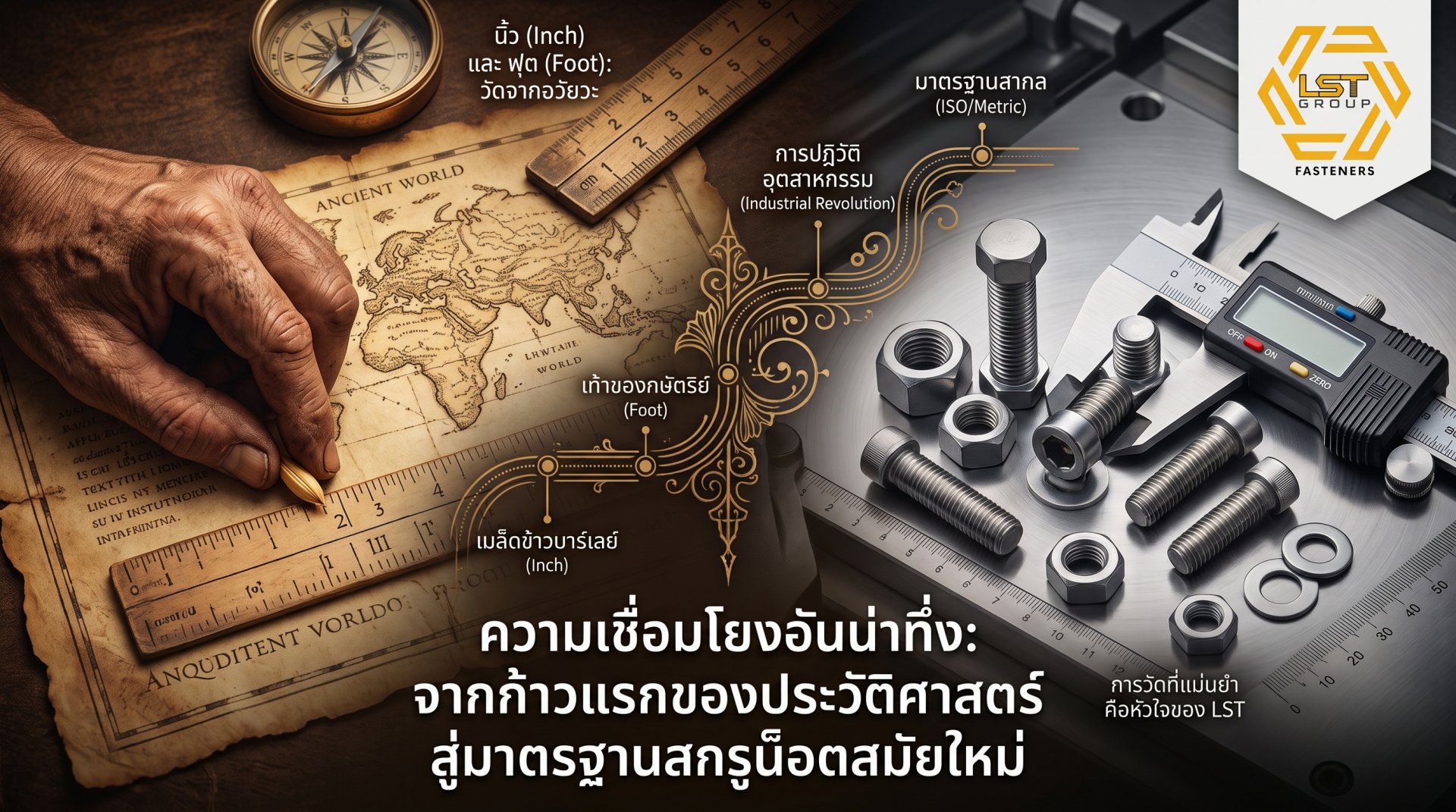
This is the English version of the requested article, presented with a clean page layout, complete SEO details, and a wide-banner article cover image that is visually engaging and directly connected to the topic.
The Surprising History of Measurements: From Ancient Kings to Your Screws & Nuts
Introduction
Have you ever wondered why, in today's digital age, we still use units like 'inches', 'feet', 'miles', and the Thai fractional 'Hun' when we walk into a hardware store? Why do our televisions measure diagonally in inches, but road distances use kilometers? It wasn't random chance, but a history spanning thousands of years, filled with stories and, surprisingly, kings and ancient footprints! We are about to decode this fascinating history, from ancient body parts to the screws, nuts, and industrial standards we use today. This journey has a lasting effect, defining the two major global measurement systems—Imperial and Metric—that define our world!
The Human-Scale World: A History of Body Parts
Before the invention of standardized tools like precise laser measures or ruler calibrations, how did people measure length? The answer is ingenious: they used their own bodies!
The Inch (Inch)
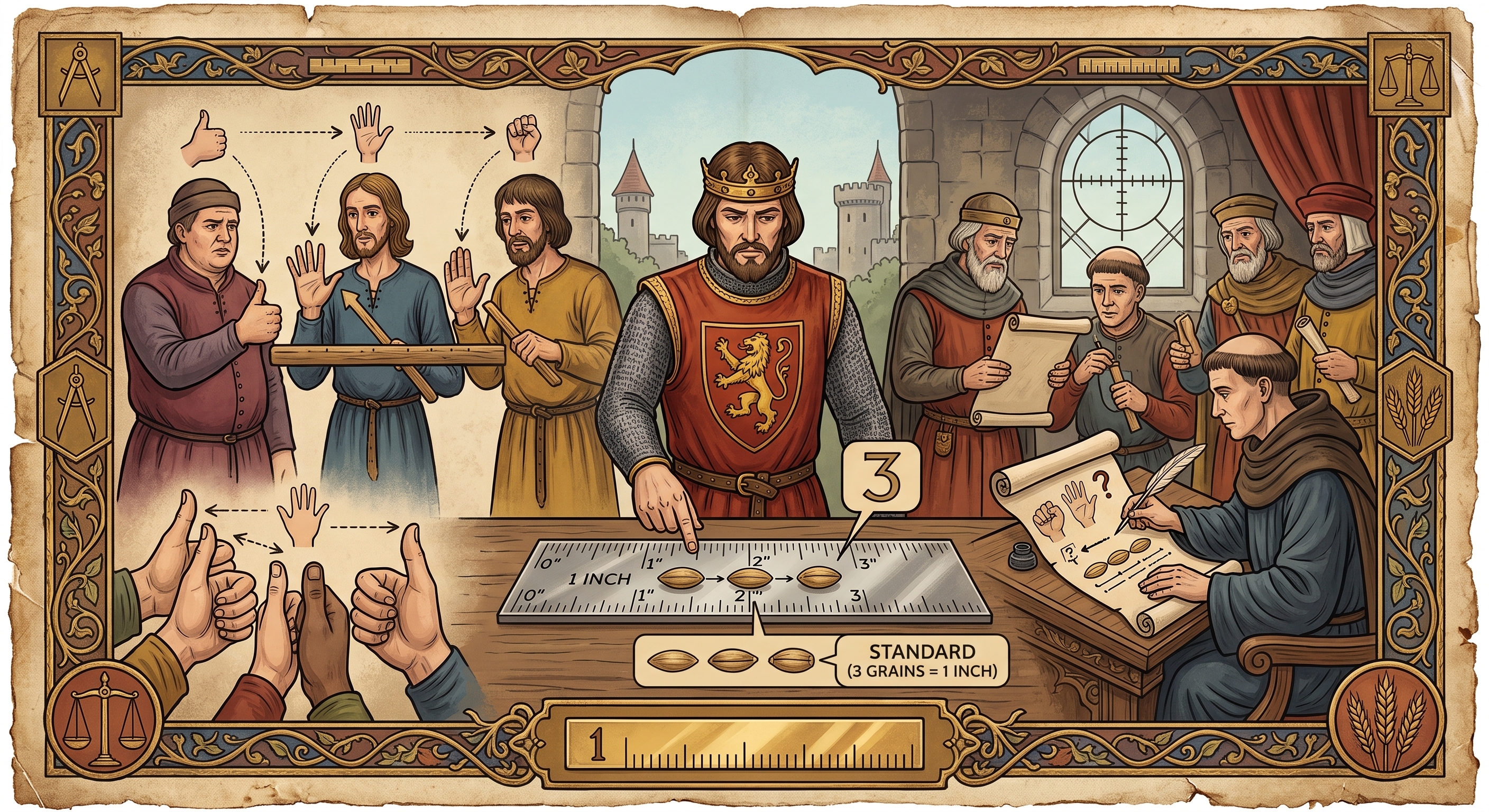
The word "Inch" comes from the Latin word Uncia, meaning "one-twelfth." But in practice, its definition evolved from something else. Historically, an inch was defined in many places as the width of a human thumb. In England, a more precise standard was later set, bizarrely, as the length of three dry, round barleycorns laid end to end. Imagine trying to measure that accurately!
The Foot (Foot)
The "Foot" is just as straightforward: the length of a human foot. Whose foot, you ask? According to legend, King Henry I of England decreed that one foot should be the exact length of his own foot, forcing his subjects to adopt a single standard. A "Foot" is, appropriately, divided into 12 "Inches."

The Mile (Mile)
The "Mile" is a truly grand measurement, and we have the Romans to thank! The word comes from the Latin phrase Mille Passus, meaning "one thousand paces." This wasn't just a regular stride, but a complete military step. A Roman soldier's single pace was counted from the time his left foot lifted until it landed again. After walking one thousand of these paces, they had traveled one "Mile"!
The Thai Fractional Inch: The Story of 'Hun'
But what about the term 'Hun'? It sounds Chinese, but in Thailand, it's used as a fraction of an Imperial inch. This is a unique Thai fusion! When Thai craftsmen, who traditionally used a Chinese decimal-like system called 'Fun' (分), interacted with Westerners using the 12-base Imperial system, they adapted. They took the base Imperial inch and divided it into eight equal parts. Each one of those parts became known as one Hun. So, a 'four-Hun pipe' is just a 4/8-inch pipe, or a half-inch pipe. It's a clever example of cross-cultural adaptation!
All of these diverse, body-based measures came together to form what is known as the Imperial System of measurements.
The Industrial Revolution and the 'World of Two Systems'
This ancient complexity became a serious problem during the Industrial Revolution (18th-19th centuries). Factories began mass-producing goods using machinery. If Factory A made a bolt with a thread measured with a different version of 'inch' than Factory B's corresponding nut, they wouldn't fit together! Precision was crucial, and inconsistent standards were an expensive bottleneck.
The Standard Inch and Whitworth Threads
Leading engineers, like Sir Joseph Whitworth in England, pushed for standardization. He created a common, repeatable standard for screw threads (the Whitworth thread), based on the Imperial inch. This standard was widely adopted, laying the foundation for many subsequent Imperial thread types (like UNC/UNF). But it was built on an imperfect, non-decimal base.
The Birth of the Metric System (Metric Standard/ISO)
Simultaneously, in post-revolutionary France, there was a radical movement to simplify everything and move away from systems associated with monarchy. They wanted a logical system based on nature, not human anatomy. They defined a new unit, the Meter, as one ten-millionth of the distance from the Earth's equator to the North Pole, measured along the meridian through Paris. The Metric System uses a logical base-10 structure: millimeter (1/1000m), centimeter (1/100m), meter (1m), and kilometer (1000m). It's incredibly easy to calculate and scale.
And so, the world became divided:
The Imperial System: Predominates in countries influenced by the United States and the historic British Empire, especially in older industrial products like pipes (using 'Hun'), certain screw standards, and diagonal screen measurements for consumer electronics.
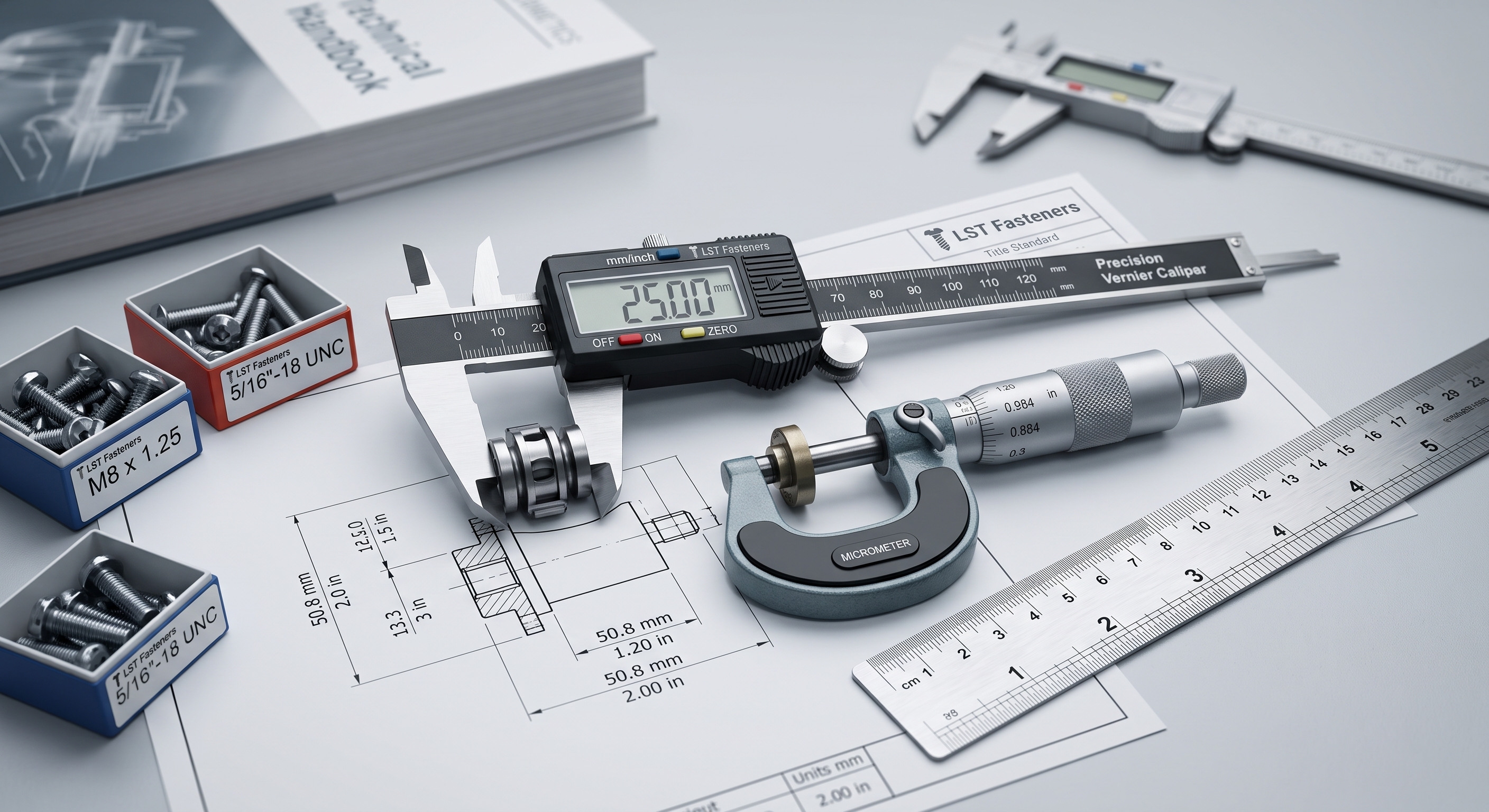
The Metric System (ISO): Adopted by almost all other nations and standard in scientific, modern manufacturing, and automotive industries (the 'M' in ISO screw codes, like M8, stands for Metric 8mm). It is the primary measurement system of the modern world.
A Precision-Driven Conclusion: Why Your Screws Don't Fit!
Knowing this history provides the ultimate answer to why your screws or nuts might not fit, even if they look similar to the naked eye! The reason is: you're likely mixing a thread from the Imperial system (like a 5/16-inch thread) with a nut or hole built to a Metric standard (like an M8). They have different diameters, thread pitches, and thread angles.
It’s remarkable to think that decisions made by kings and the length of a soldier's step could still affect the size of the screws and nuts you handle. From barleycorns and royal feet, we've transitioned to standard global measurements, yet the story of how we measure continues to shape every aspect of our world—from building construction to the screen in your hand.