Drilled the hole too big? Fix 'loose or spinning anchor bolts' easily! 100% safe—never worry about things falling on your head again!
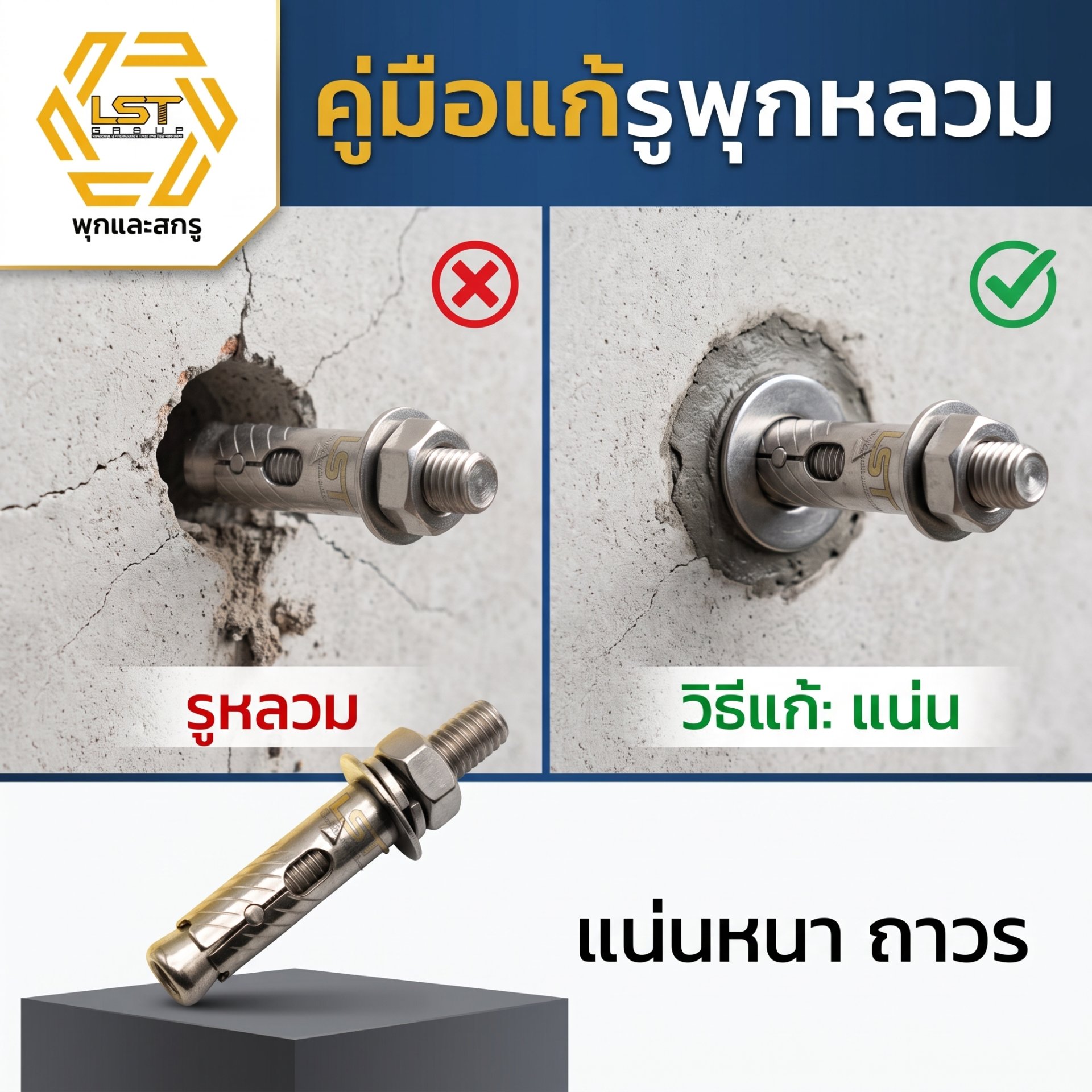
Have you ever experienced this? You bought a high-quality mount for your large-screen TV or an air conditioner compressor, planning to show off your DIY skills by drilling the wall and installing "steel anchor bolts" yourself. But alas! You pushed a bit too hard, the drill wobbled a little, and the result? An "oversized hole"! You insert the steel anchor and it's completely loose. You try tightening the nut, but the anchor just keeps spinning in place (a stripped anchor). If you force it and hang your item anyway, you're terrified it's going to come crashing down in a disaster!
Many people might have heard of the classic trick of stuffing "matchsticks, toothpicks, or zip ties" into the hole to tighten it up. I have to hit the brakes hard right here and say... STOP doing this immediately! Those tricks only work for "plastic anchors" carrying light loads. If you use them with "steel anchors" that have to support tens to hundreds of kilograms, the expansion mechanism of the metal will completely crush the wood or plastic debris. This will cause the anchor to slip and can lead to severe accidents!
If you mess up a drill hole for a steel anchor, the problem must be solved using proper engineering standards. Today, I've summarized 3 professional ways to fix a loose steel anchor bolt. Follow these, and I guarantee a rock-solid hold!
3 Heavy-Duty Fixes for an "Oversized Steel Anchor Hole"
1. Up-Sizing - The easiest and fastest fix! If the drilled hole is too large for the original anchor size (for example, you intended to use an M8 anchor but it's loose), don't force it in!
How to do it: Switch to a drill bit that is one step larger and re-drill the original hole to make it smooth. Then, upgrade to an M10 steel anchor instead.
Pros: Fast, no waiting time, and 100% as strong as a newly drilled hole.
Caution: You must also check the hole on your workpiece (like a steel plate or TV mount bracket) to see if a larger bolt can pass through it. If the hole on the workpiece is too small, you'll need to skip to Method 2.
2. Upgrade to a "Chemical Anchor" - The ultimate heavy-duty solution! If the hole is extremely oversized or the edges of the concrete are crumbling to the point where a steel anchor can't expand and lock, changing the anchoring system is the best answer.
How to do it: Clean the hole as thoroughly as possible (this is crucial). Then, inject construction epoxy/chemical anchor resin until the hole is almost full, and insert a threaded rod instead of an expansion anchor. Wait for the resin to fully cure and harden according to the time specified on the tube.
Pros: Can support a massive amount of weight, and the chemical resin will help bond any micro-cracks in the concrete hole, making it even stronger than before!
3. Fill & Relocate - 100% guaranteed safety! If the original hole is ruined beyond repair and the structure looks untrustworthy, we need to take a step back and start fresh.
How to do it: Mix non-shrink grout or epoxy glue, fill the original hole completely, and smooth out the surface. After that, measure the distance to "drill a new hole."
Caution: The new hole should be relocated at a distance of at least 3 to 5 times the diameter of the anchor away from the original hole to avoid intersecting with cracks in the old concrete.
Conclusion: Remember, everyone, when it comes to structural work and hanging heavy items, "safety must always come first." Keep those little DIY tricks for lightweight tasks, but for steel and concrete work, only proper knowledge should be applied. When giving the final tighten to a steel anchor nut, it must feel "tight and secure" without spinning freely. If you follow this, I guarantee your home will be completely safe and worry-free!
Buy concrete anchor bolt today